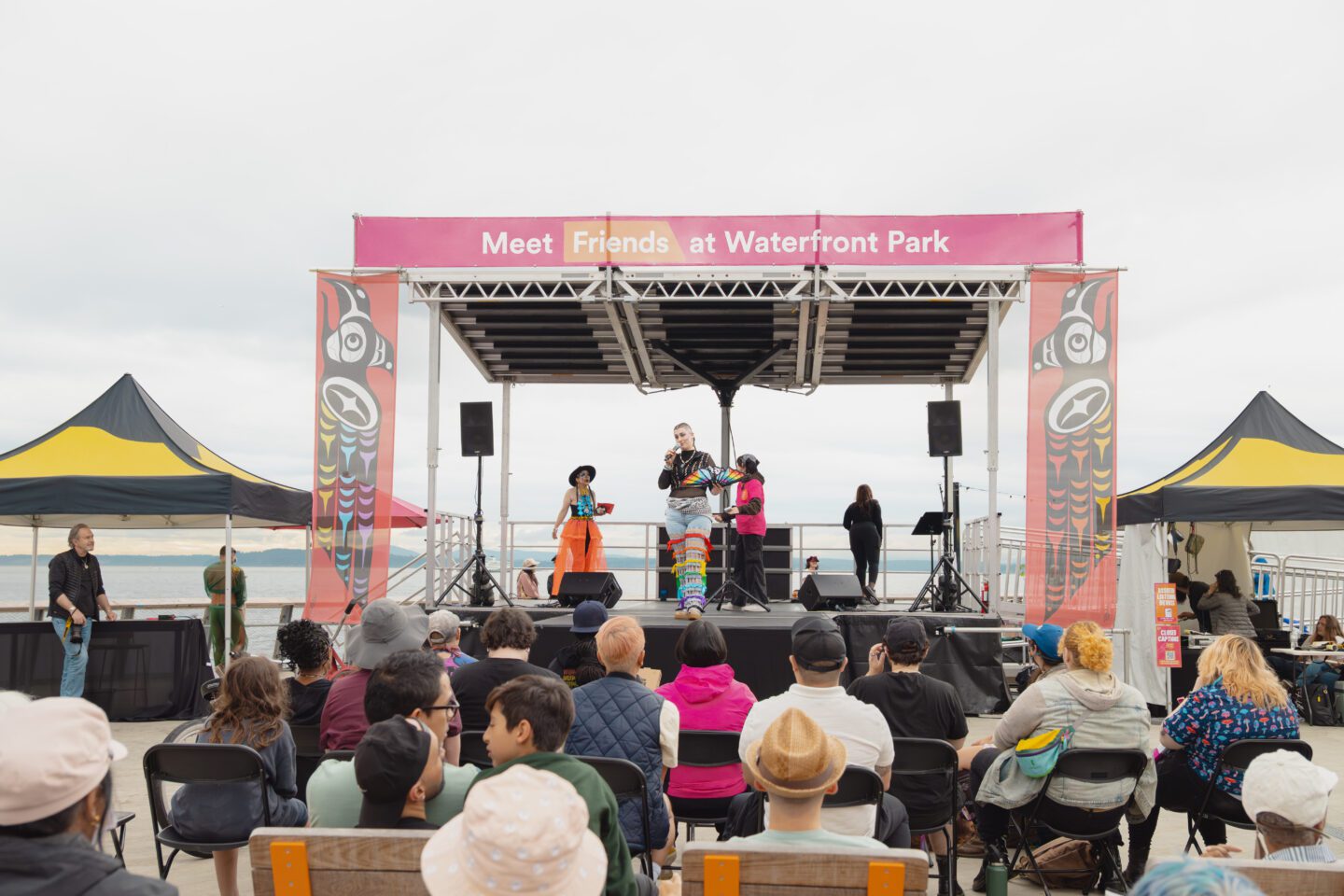
Picture this: it’s backstage at Indigiqueer Festival and two drag artists, Koko Swallowz and Cherry Bepsi, are deep in a conversation about their Twitch stream. Not nerves. Not logistics. Just two people who’ve become friends, laughing before a show, talking about video games like they’ve known each other for years.
That moment is one Friends public programs manager and curator of Indigenous programs and artist Jordan Remington (Quileute, he/they) still holds onto. “That backstage energy,” they say, “just the way it changed. People knew each other. The amount of laughing that was happening—it was so cool.”
That’s what five years of Indigiqueer Festival looks like. Not just bigger—though it is, growing from four drag artists in year one to fourteen this year, all from the Pacific Northwest. It’s a community that found itself.
It Started with a Question
Before there was a festival, there was a digital campaign. The Northwest Portland Area Indian Health Board was working on Digital Queer Joy—sending photographers across the country to capture queer Indigenous people in places that made them feel joy. When they came to Jordan about the Seattle chapter, they had been quietly turning over a bigger idea.
“What if we did a festival?” Jordan asked.
The board said yes. And just like that, Indigiqueer Festival was born; out of a belief that gathering together is itself an act of joy. That seeing each other, being seen, and celebrating together is how a community experiences and expresses who it is.
Jordan developed that first festival thinking they might be the only Native drag artist in all of Seattle. And it led to quite the journey.
-
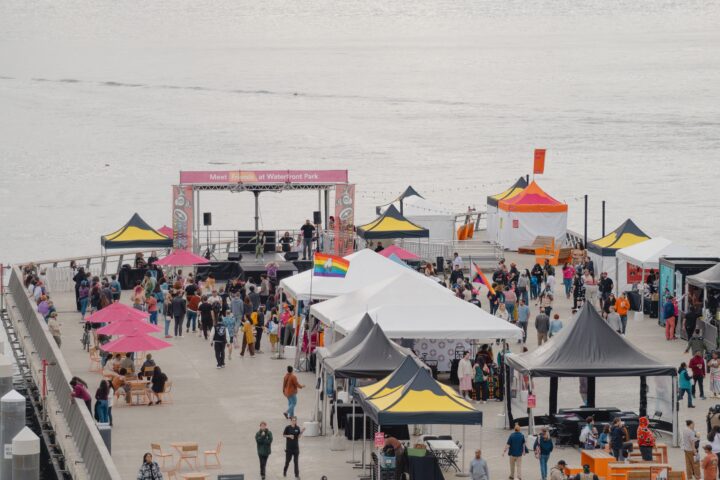
- Community gathers at Pier 62 for the 2025 Indigiqueer Festival. Photo by Jo Cosme
-
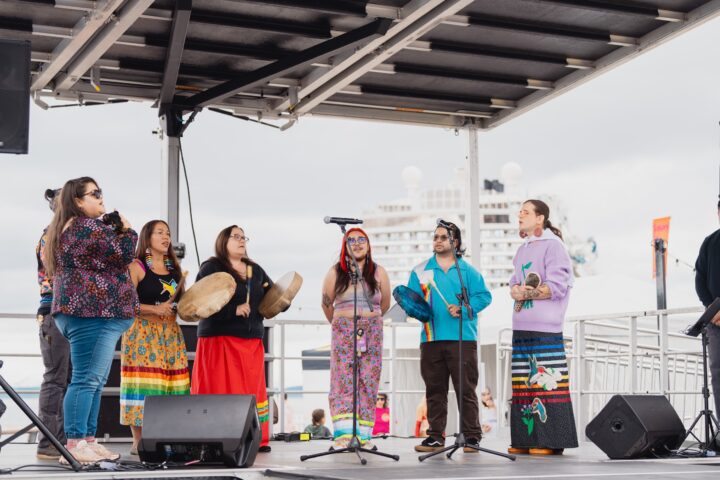
- Indigiqueer members perform together on stage. Photo by Jo Cosme.
-
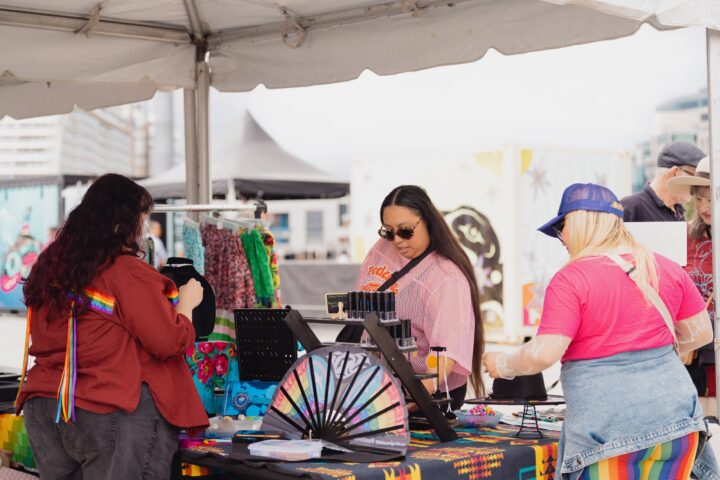
- A guest views crafts from a vendor at the 2025 Indigiqueer Festival.
-
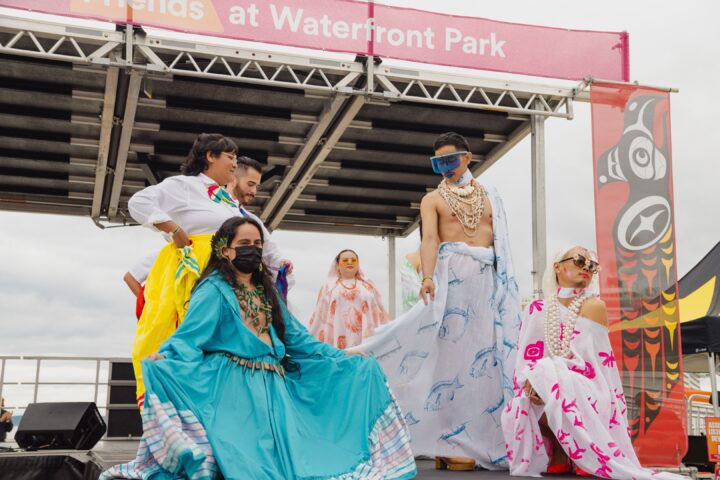
- Nuestra Euforia designers, Roldy Aguero Ablao, Vaquero Azul, and Roquin-Jon Quichocho Siongco “Cruz” with fellow models on stage. Photo by Jo Cosme.
-
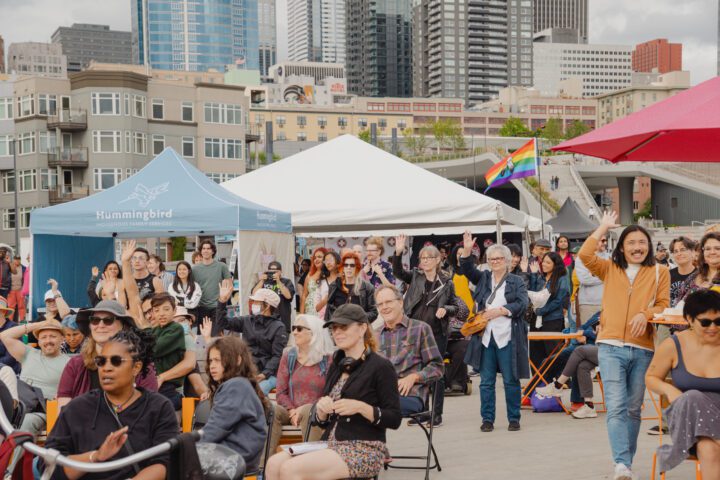
- Crowd captivated by Indigiqueer performers. Photo by Jo Cosme.
-
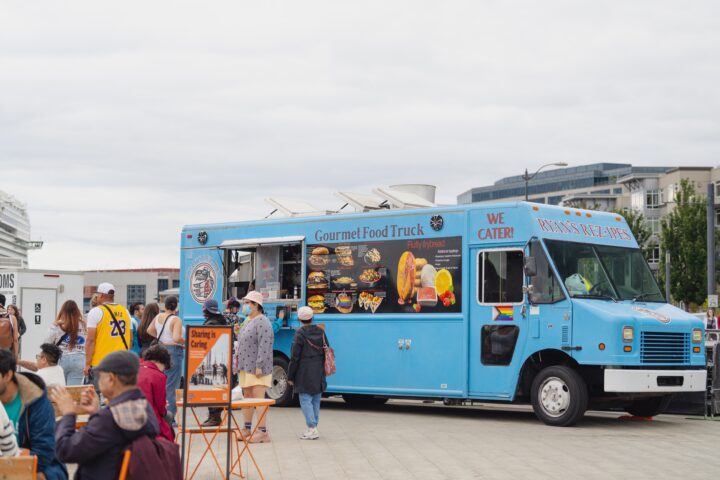
- Ryan’s Rez-ipies food truck on Pier 62. Photo by Jo Cosme.
Loud on Purpose
Native artists have always been doing work in Seattle. That’s not the challenge. The challenge is that audiences don’t always know it. Someone could watch a drag performer, love the show, and walk away never realizing they just witnessed a Native artist doing their thing.
Indigiqueer is loud about that on purpose. “It’s so easy for Indigenous communities to get washed over,” Jordan says. “For our presence to feel diminished. So we’re trying to make it very loud.” Naming it explicitly means that when someone spots a performer they recognize at another show across the city, something clicks: Oh, I know that person from Indigiqueer. That recognition, the knowledge that this community is here and it’s big, is exactly the point.
Finding Each Other
The queer Indigenous community in the Pacific Northwest didn’t grow because of this festival. It was always there, always big. What the festival did was help people find each other.
Those first years, Jordan was pulling artists from across the western United States just to fill the program. Now, artists reach out to them. This year’s lineup is entirely Pacific Northwest—something that felt impossible at the start and now feels like the natural order of things.
One of Jordan’s favorite moments from recent years: an artist gesturing at a boat on the water—one with traditional Indigenous designs along its hull—and saying, deadpan, to the crowd of tourists nearby: relatives, you’ve traveled so far. The festival has that quality. Warm, knowing, funny—made by and for people who are in on the joke.
To the Indigiqueer Community, You’re Not Alone in This
There were times Jordan felt like they were the only Native drag queen in the city. Maybe the only Native gay person they knew. It’s a particular kind of loneliness, and it’s one they didn’t fully name until he started to feel it lift. “Being able to meet so many amazing artists and build that community — it’s helped get rid of that isolation feeling,” they say. “I’ve come to love so many of these people.” Their family comes to the festival every year. They hopes the festival becomes that for others, too.
There’s a young Native queer kid Jordan keeps in mind when they think about what this festival is for. The narratives about being Indigenous, about being queer, can be heavy. The Indigiqueer Festival holds space for something else: adults visibly living their best lives. Joy as a form of resistance. Hope as a practice.
“It’s a really exciting experience to perform in such a public and iconic part of Seattle. My hope for audiences is that they come back learning More about our community but also for folks who hosts queer shows to learn and remember that there ARE indigenous folks who do drag and queer art, it’s really not that hard to find us and book us for shows.” – Gila Suspectum, artist
To What Comes Next
Five years in, Jordan is continuing to celebrate what’s been built and also thinking about how to keep building. They want to bring more community voices into how the festival is organized and shaped and to move toward something with roots wide enough to outlast any one person.
And they’ve already experienced the thing they most hoped for at the start to happen: artists who met at Indigiqueer Festival are going out and making events together. The festival as a first introduction, a spark, a place where people find their people — and then take that connection back out into the world.
“My vision is that this eventually grows into something that spreads beyond just this one event,” they say. “People can go out and continue to do the work with the people they’ve met. That’s one of the coolest things that has come of it.”
Indigiqueer Festival is free and open to everyone. Come see how big and how inviting this community is on Saturday, June 27—and support these artists year-round.